



Game info
Farming, Simulation, Management
Hay Day is a farming simulation built around growing crops, feeding animals and turning basic ingredients into products. A farm becomes easier to manage when its production chains, storage space and orders work together.
About Hay Day
Hay Day is a farming simulation built around growing crops, feeding animals and turning basic ingredients into products. A farm becomes easier to manage when its production chains, storage space and orders work together.

Gameplay overview
Plant a crop, harvest it, reserve enough seed for the next planting and use the rest for feed or production. Machines convert ingredients into goods over time. Orders and sales provide reasons to balance what is growing, what is waiting in a machine and what is already in storage.
How to Play
Treat the farm as a small supply chain. Before filling an order, check whether its ingredients will be needed for animal feed or another machine. Short crops suit an active session; longer production can run while you are away. Expanding the farm without maintaining inputs can leave several machines idle at once.
Controls
touch farm plots, buildings and order panels; drag harvesting and planting tools as prompted. Browser farming alternatives have their own click/tap controls.
Pro Tips
- Keep seed stock instead of selling the last of a crop.
- Queue products that use the ingredients currently available.
- Compare an order’s requirements with your storage situation.
- Use the official Supercell account and support routes for native-game progress.
Making Better Decisions
Before leaving the farm, inspect the production chains from the beginning rather than only collecting finished goods. A feed shortage can keep animals from producing, and missing ingredients can leave a valuable machine idle. Short active sessions suit tasks you can collect soon; longer absences are a chance to queue products that take more time. Keep enough basic inputs to recover after an order consumes a large amount of stock. A new building is useful when you can supply it, not simply because it becomes available. When storage is tight, compare the next realistic orders and production needs instead of selling random items to create one empty slot. This turns expansion into a manageable plan rather than a repeating shortage.
Features, Modes and Progression
Unlocking farm activities expands the production choices. Live events and feature availability change; current Supercell help pages should supply event-specific details rather than fixed promises about rewards.
Follow a production chain from start to finish
Choose one order and work backwards from the requested product. Which ingredients do you already have, which must be produced, and which machine will be occupied? This small plan helps distinguish a genuine supply problem from a task that simply needs time. If you start several jobs without checking their inputs, they can compete for the same limited ingredient. Watch what the next harvest or production cycle will make possible before accepting another demand. A farm becomes easier to manage when its parts support one another instead of producing disconnected stock.
Keep capacity available for the next decision
Storage is useful space, not just a target to fill. Before producing a large batch, consider whether it will block collection of something needed sooner. Sell or use products for a clear purpose and compare the effect on your next planned order. Check the current game’s machine, storage and order information before relying on an old upgrade list.
Crops, animals and the machines that connect them
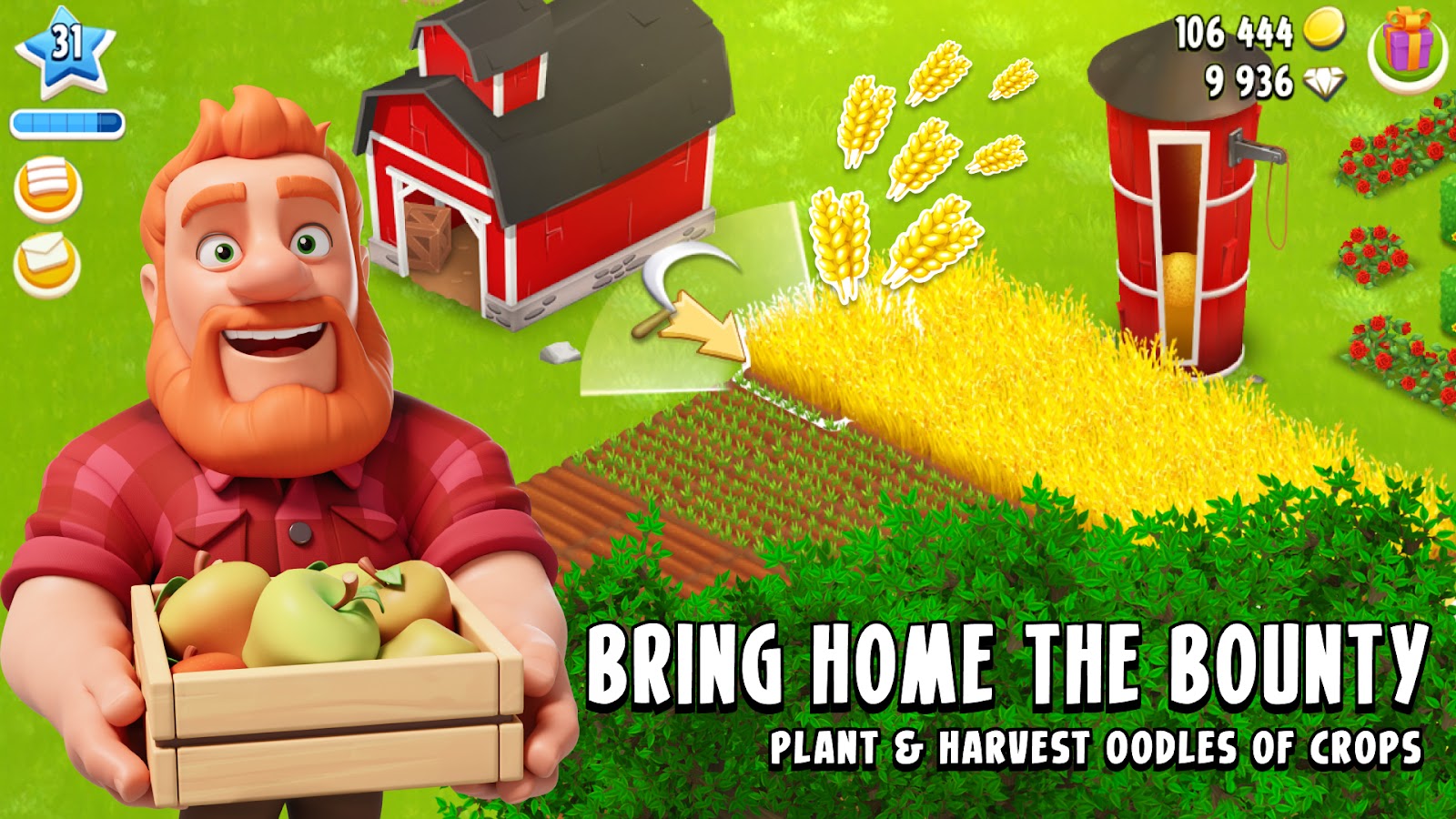
Hay Day's farming identity is built from recognisable materials. Wheat and corn are among its crops; feeding animals supports products such as eggs and dairy. Those raw materials become more useful when production buildings turn them into goods for the farm's orders and trade. The relationship between a harvest, an animal product and a recipe is the foundation of the management game.
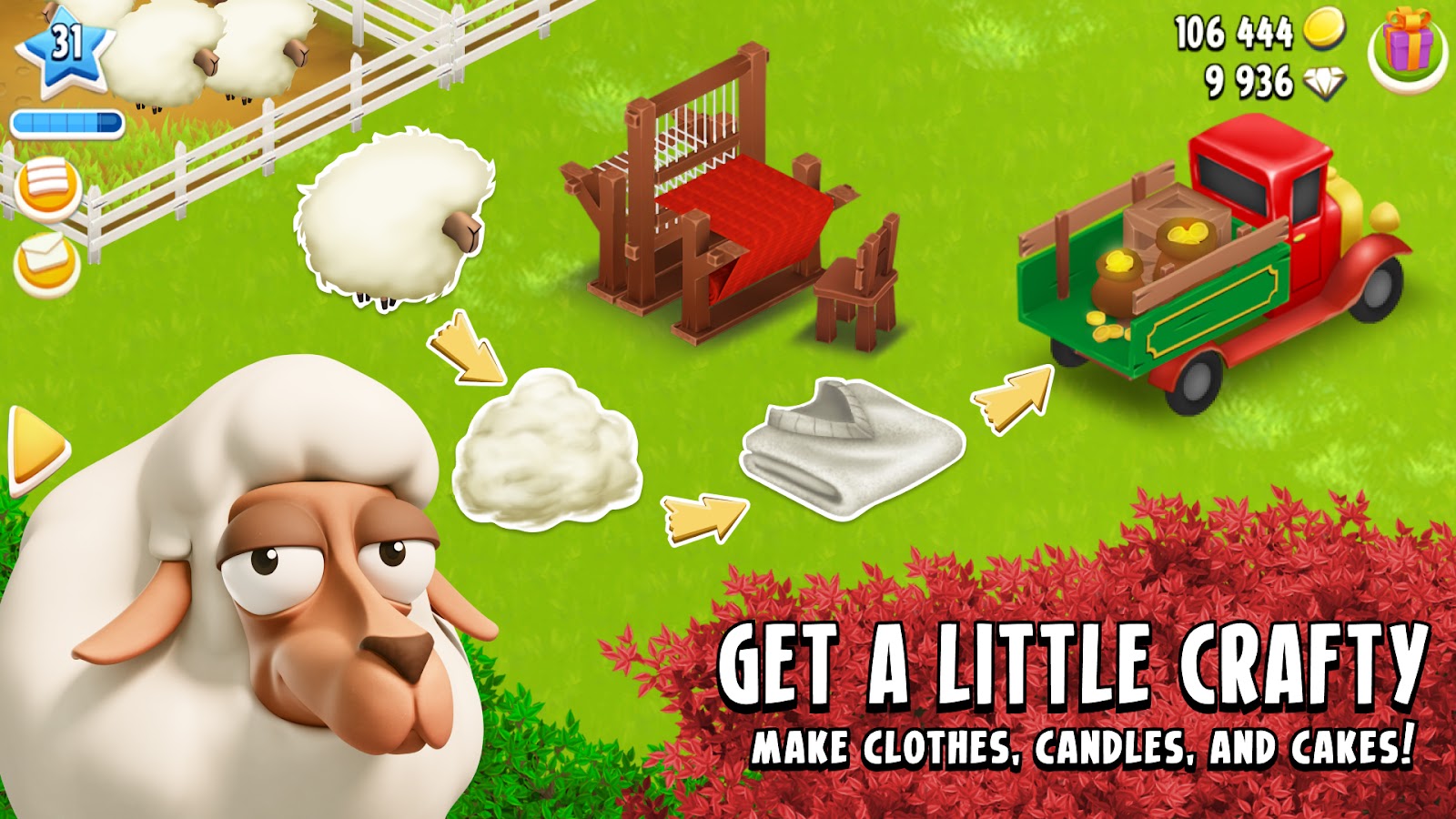
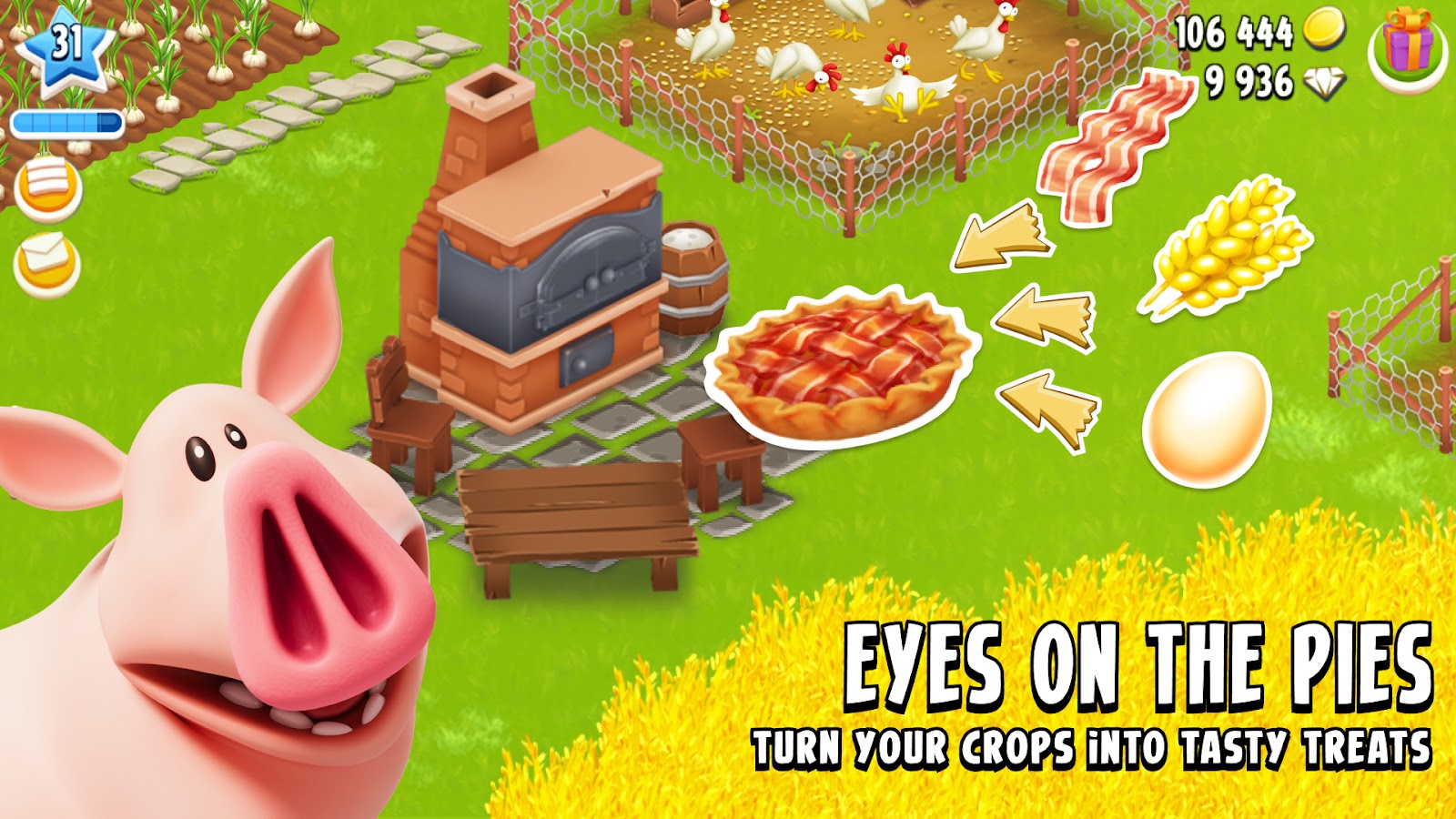
The official product describes buildings including the Bakery, BBQ Grill and Sugar Mill, with further production such as the Loom, Sewing Machine and Cake Oven. Each introduces another connection between resources and a finished item. Opening a machine is therefore more than adding decoration to the map. It creates a new reason to keep particular ingredients available and another queue to include in the production plan.
Trading, fishing and exploring beyond the first fields
Truck orders give products a clear destination, while trading and neighbours connect the farm with a broader community. These activities should be compared with the resources they consume. Fulfilling a request can be rewarding, but using the final supply of an ingredient may also delay a different recipe. A farm with a clear next job is easier to run than one attempting every request simultaneously.
Fishing and the Valley are among the wider activities associated with the published Hay Day game. They provide changes of pace from the original fields and machines. Let the game's current progression establish when an activity is available instead of expecting every system at the beginning. The farm can grow gradually: understand the first crop loop, keep animals supplied, connect a machine to an order and only then add another part of the wider countryside to the routine.
From one crop to a working farm
Hay Day farming is a network of small production decisions. Crops supply feed and ingredients; animals provide materials; machines turn those materials into products that can fulfil an order. The farm becomes easier to manage when you follow one chain from its beginning to its destination. Choose an item you want to make, inspect the recipe, and check which ingredients are already available before filling a machine's queue.
Planting the same crop everywhere may create a large stock of one ingredient while leaving another machine idle. A mixed planting plan can support the jobs you actually want to finish. Keep an eye on how much seed remains before selling the last of a useful crop. A farm does not need every possible product ready at once. It needs a workable next step, with enough room and raw materials to collect the result when production finishes.
Using machines without creating a bottleneck
A machine's queue and the ingredients feeding it should be considered together. If several products use the same input, filling every queue independently can leave a later order waiting for something you already spent. Look across the production buildings before assigning a large batch. A shorter job that supplies another machine may be more useful than a long queue of finished products with no immediate destination.
Arrange the farm so frequently used buildings are easy to find. Decoration gives the farm personality, but a clear working area also makes it easier to notice an idle machine or completed collection. When a job is delayed, identify the actual bottleneck: missing crop, occupied machine, insufficient feed or lack of storage. Each has a different solution. Adding another unrelated task usually makes the delay harder to understand.
Barn and silo space are part of the plan
Storage is not just a progress counter. It determines whether the next harvest or product can be collected. Before starting a large batch, think about where the items will go and whether another job will need that same space. If collection is blocked, review stock you can use in a planned order or sell through an appropriate in-game option instead of producing more simply because a building is available.
Keep expansion and upgrade goals separate from routine supply. Items saved for an upgrade may be valuable even though they do not complete the current order, while a surplus product may be occupying space without helping either goal. There is no universal inventory list that suits every level and farm layout. Your current machines, upcoming recipes and preferred activities should shape what you keep.
Orders, visitors and the roadside shop
An order gives production a destination, but accepting every demand is not the same as running the farm efficiently. Compare the requested items with your current supply and the time needed to replace them. A request that consumes a scarce ingredient may hold up several other jobs. Check the reward and requirements shown by the current game before deciding whether it fits the session you have available.
The roadside shop adds a different kind of decision because you can offer products to other players. Use the in-game information to understand current listing and trading options. Avoid external arrangements that ask for passwords or promise account resources. For social activities, keep communication within the game's supported features and review the current help information when an invitation or transaction is unclear.
A short visit and a longer farming session
For a short Hay Day visit, collect what is ready, restore the inputs needed for the next cycle and leave a sensible production queue. Check storage before harvesting everything. This routine helps the farm make progress without requiring a new objective every minute. It also gives the next visit a clear starting point: finished products should support the orders you planned earlier.
A longer visit is a good time to trace a complete recipe chain, reorganise a busy area or compare competing orders. Work through one constraint at a time. If feed is repeatedly missing, fix that routine before planning another product line. If a machine is consistently idle, examine the ingredient supply rather than assuming the machine itself needs an upgrade. The farm's rhythm comes from those connections.
Learning about updates without relying on old event lists
Supercell's Hay Day page links the official product and store destinations. For changes to recipes, events or social features, use current in-game notices and Supercell support. A fixed reward list from an older event should not determine today's production plan. Check the active requirements first, then decide how much attention that activity deserves.
Hay Day works well as an ongoing project because a small improvement remains useful after the current order is complete. A clearer route between buildings, a better-balanced crop supply or a less crowded barn can improve many future visits. Let decoration reflect the farm you enjoy while keeping its working parts understandable. The result is a farm that feels personal and remains practical to run.
Worked example: one order competing with two machines
Imagine that a requested product needs an ingredient that is also used by another production building. Filling both queues independently can create a shortage even though each choice looked reasonable on its own. Work backwards from the order. Identify the required ingredient, the machine that processes it and the space needed for the finished product. Then compare that complete chain with the other job using the same input.
This makes a delay easier to explain. A missing ingredient needs a different response from an occupied machine or full storage. Choose the action that addresses the actual constraint. Producing an unrelated item may keep the farm busy without bringing the order any closer to completion. A useful production decision has a destination, not only an available button.
Worked example: a full barn before the harvest
Before collecting a large crop or production batch, check where it will go. If storage is nearly full, inspect stock that can be used in a planned recipe or supported sale. Keep upgrade materials and routine supplies distinct so you understand why each item is being retained. The right inventory depends on the current farm, not a universal list copied from another player's level.
Once space is available, restore the inputs needed for the next cycle before starting several new projects. A well-prepared short visit can leave the following visit with a clear sequence of useful collections. That routine is more dependable than expanding the task list every time another building becomes available.
The farm layout is part of the interface
Arrange frequently used buildings so their state is easy to recognise. A decorative farm can still have a readable working area. Notice whether repeated trips are caused by the layout or by forgetting an input. The first may benefit from reorganisation; the second from a simpler production plan. Check the current game's confirmation prompts before spending limited resources. A calmer view of the farm makes it easier to enjoy both its appearance and the management decisions behind the next delivery.
Related games
Frequently asked questions
What should I keep when selling crops?
Keep enough seed to replant and enough inputs for the production you intend to run.
Does a farming browser game share my Hay Day farm?
No shared save or Supercell ID support should be assumed for an unrelated browser game.
Who develops or publishes Hay Day?
Supercell
Which controls should I use?
Native: touch farm plots, buildings and order panels; drag harvesting and planting tools as prompted. Browser farming alternatives have their own click/tap controls.
Is it free?
The observed Google Play listing is free to download and offers in-app purchases. A browser alternative has its own provider terms and may include adverts.
Can I use my official account or saved progress in a browser alternative?
No account, purchase or save transfer is established unless the developer explicitly documents it for that build.
What games should I try next?
Compare farm management, crop growing, farm simulator, idle farming. The related list prioritises shared mechanics and preserves each game’s real identity.

Good game? Tell us.0
Share a tip, celebrate a high score, or tell us what you think. Keep it friendly.